James Hurley
Postdoctoral Research Associate, University of Newcastle
I'm part of the ARC Research Hub for Connected Sensors for Health. I design haptic interfaces that let blind and partially sighted musicians and sound creators work with digital audio tools by touch.
Before returning to research, I spent over two decades at the University of Technology Sydney building music and media production facilities, leading teams and teaching sound, film and digital production. Alongside this I worked freelance as a music editor and producer, and as a sound designer, mixer and composer, on films, television, radio, sound installations and interactive media.
Research
-
Postdoctoral Research Associate
ARC Research Hub for Connected Sensors for Health, University of Newcastle
My research focuses on accessibility, usability and haptic design. I develop haptic interfaces that make music and audio production accessible, and I also research the usability and accessibility of technology used in stroke rehabilitation.
-
Haptic feedback as a means to improve accessibility and usability for blind and partially sighted digital music and sound creators
PhD, University of Newcastle, Australia
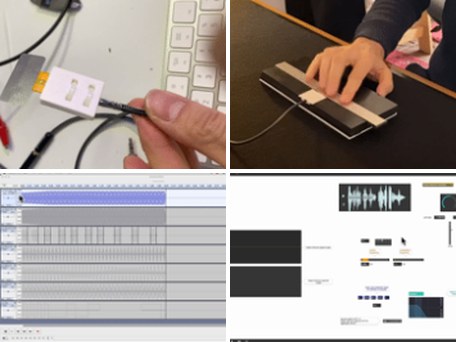
Digital audio workstations rely heavily on visual displays such as meters, waveforms, faders and plug-in interfaces. Using a participatory design methodology, this research worked with nine blind and partially sighted music and audio creators as co-designers rather than test subjects. Across three sessions, held wherever possible in their own places of practice, participants identified the gaps their accessibility tools left, built a shared language for touch, and co-designed and evaluated two haptic prototypes, HAPCI and HFAM, that give direct, non-visual access to that information.

Publications
2026
-
Haptic Interfaces for Accessible Audio Mixing
James Hurley, Jon Drummond, A. J. Bongers
IEEE Transactions on Haptics, Special Issue: Haptics for the Arts, pp. 1–13.
-
Under review
Finding Words for Touch: Haptic Language and the Accessible Sonic Environment
James Hurley, Jon Drummond, Bert Bongers
Leonardo, Focus Section: Architecture of Care
A participatory design study with nine blind and partially sighted music and audio creators, co-constructing a shared haptic vocabulary for designing accessible sonic environments.
-
Conference proceedings
Vibrotactile Feedback for Accessible Audio Production: Demonstrating HAPCI and HFAM
James Hurley, Jon Drummond, Bert Bongers
Proceedings of the 28th International Conference on Multimodal Interaction (ICMI ’26), pp. 1465–1467. ACM.
-
Conference proceedings · 15-minute presentation, 4 Nov 2026
Rewiring the Studio for Flow: Haptic Feedback and Accessible Music Production
James Hurley, Jon Drummond, Bert Bongers
Most Wanted: Music Research (MW:MR 2026), Research track · Berlin Music Commission and Gesellschaft für Musikwirtschafts- und Musikkulturforschung · presented with Joy Bausch
Flow, the absorbed state producers organise their practice around, depends on feedback that arrives in the same moment as the action. For blind and partially sighted producers, screen-reader speech competes with critical listening for the same auditory channel, so that feedback loop keeps breaking. Drawing on a participatory design study with nine creators and two co-designed haptic prototypes, HAPCI and HFAM, this talk shows how feedback felt at the point of control enables characteristics of flow, a pattern also emerging across a growing body of research on haptic tools for blind and partially sighted producers. It argues that co-designing with the creators who have the least access yields better tools for everyone: a haptic channel built into the tactile interfaces every producer already uses is a design principle, not a specialist accommodation.

2025
-
Haptic feedback as a means to improve accessibility and usability for blind and partially sighted digital music and sound creators
James Hurley
PhD thesis, University of Newcastle, Australia.
2013
-
Conference presentation
The Art of Sound: exploring the intersections of sound recordings and visual art
Brendan Smith, James Hurley
Museums Australia (MA) National Conference 2013, 17–20 May 2013 · National Convention Centre, Canberra, ACT
Conference theme: how museums and galleries engage with communities and collections during the Centenary of Canberra. The presentation discussed the NFSA’s The Art of Sound touring project with regional galleries.
Prototypes and Interfaces
Haptic devices co-designed with blind and partially sighted music and audio creators.
-
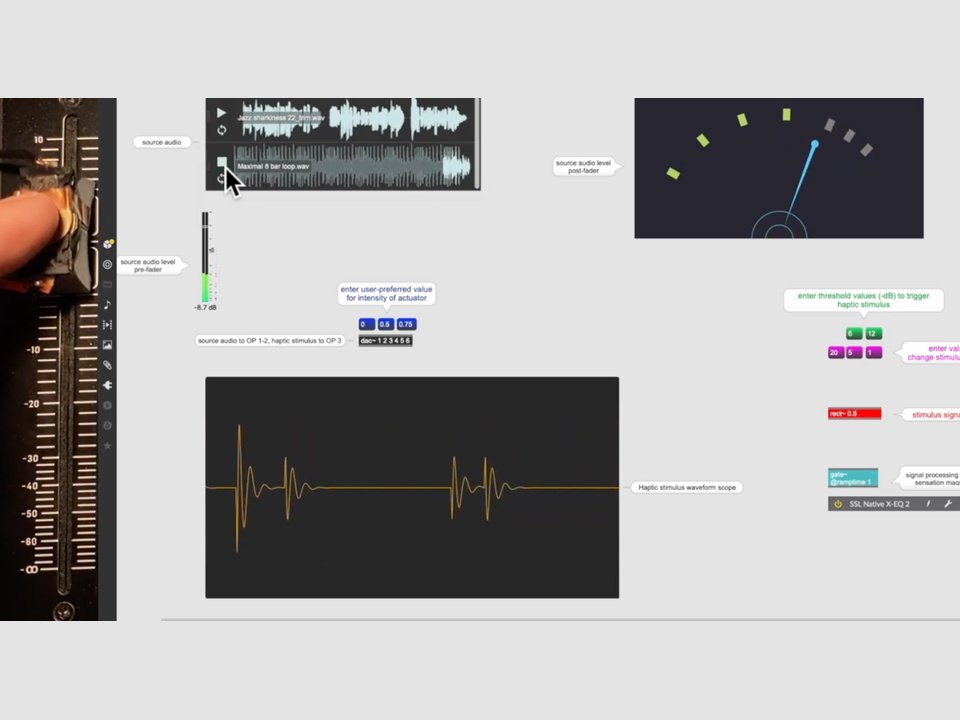
HFAM: Haptic Fader Audio Meter
Vibrotactile level metering built into a standard fader cap, so the producer feels signal levels and peaks in real time at the point of control while keeping their ears on the mix.
-
HAPCI: Haptic Audio Parameter Control Interface
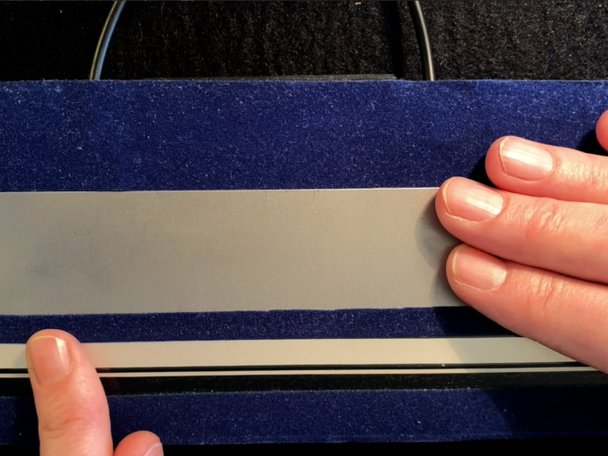
A dedicated tactile surface that delivers vibrotactile feedback on audio parameter values, so blind and partially sighted producers can set and automate parameters by feel instead of waiting for screen-reader speech.

Creative work
-
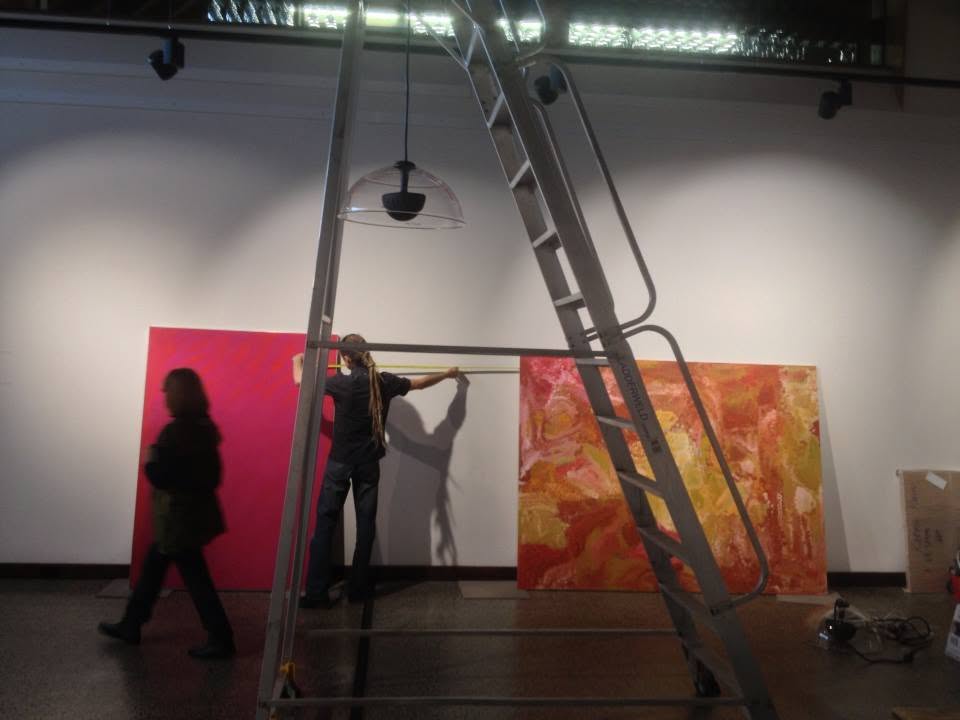
The Art of Sound
Sound Installation and Exhibition Specialist · National Film and Sound Archive of Australia
A collaboration between the NFSA and regional art galleries exploring the intersections between sound and the visual arts. The NFSA curated a palette of Australian recordings, from songs and speeches to experimental works and environmental sound, and each gallery paired them with works from its own collection.
- Grafton Regional Gallery, NSW: 23 January – 13 February 2013
- Holmes à Court Gallery at Vasse Felix, Margaret River, WA: 9 June – 15 September 2013
- Caboolture Regional Art Gallery, QLD: 19 October – 14 December 2013
- Burnie Regional Art Gallery, TAS: 9 May – 29 June 2014
-
Mechitza 7.1
Tobaron Waxman, James Hurley (sound artist and composer), Jesse Zaritt
ICI Berlin – Institute for Cultural Inquiry, 18 October 2010
A motion-activated sound installation and performance in 7.1-channel surround sound. It uses the mechitza, the partition separating women and men in Jewish prayer spaces, to examine borders and the segregation of public and private space, drawing on field recordings made in Palestine and in prayer spaces in New York.
-
Lucky Miles
Feature film, 2007 · Music editor · Director: Michael James Rowland · Composer: Trilok Gurtu · Short of Easy Productions with the South Australian Film Commission
Sydney Film Festival Audience Award 2007
The full film is password protected; the password is available on request.
-
Dust to Dust
Short film · Sound designer and location recordist · Director: Oksana Sokol · NSW Film and Television Office
-
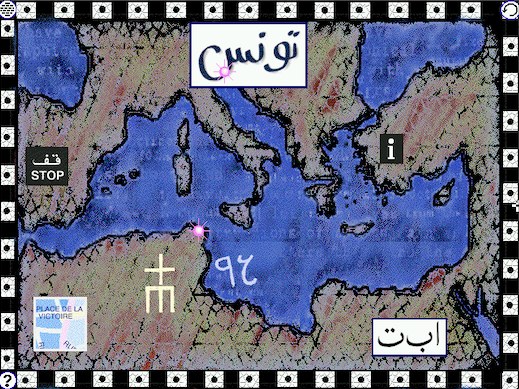
Postcard from Tunis by Sally Pryor
Interactive CD-ROM · Sound designer · Published by Phonurgia Nova, Arles, France
An interactive portrait of Tunis exploring writing and how it changes at the human–computer interface: rolling over the screen turns Arabic script and imagery into dynamic signs.
Finalist, Best Use of Sound, Australian International Multimedia Awards 1997 · Selected for the New Talent Pavilion, MILIA 1997

Further credits
- 2004The Birth of Superbird, animation — re-recording mixer. Director: Tom Mutch, Bird’s Nest Studio Productions, New Zealand.
- 2001Tune in to Fairfield City, audio CD walking and driving tour — sound engineer and mixer. Migration Heritage Centre, NSW Premier’s Department and Fairfield City Council. Project page (opens in a new tab)
- 2000Sydney, TV documentary — sound editor. Director: Tim Slade, SBS Independent / RB Films.
- 2000The X, Y, Z of IT, ABC Audio Arts commission — composer of “Getting Around” (as Spilt). Producer: Melody Sumner Carnahan. Trove record (opens in a new tab)
- 1999Sixpack, 12-part radio drama — producer. Director: Michael Neaylon; broadcast on OUT-FM, Sydney, and 2JJJ-FM. Community Broadcasting Association of Australia Programming Award 1999; Australian Writers’ Guild Radio Award 2000.
- 1998Feeling Sexy, feature film — ADR editor. Director: Davida Allen, Binnaburra Films. Clip on Australian Screen (opens in a new tab)
- 1996Oscar and Lucinda, feature film — sound assistant and Pro Tools technical support. Director: Gillian Armstrong; sound supervisor: Andrew Plain.
About
I'm a sound practitioner turned researcher. Three decades in studios as an engineer, editor, sound designer and teacher led me to the question at the centre of my research: what happens to creative flow when the tools of music production depend on sight?
My work brings haptic feedback into digital music and sound environments, so that blind and partially sighted producers can feel what sighted producers see: levels, peaks and parameter values, at the point of control. I work through participatory design, building prototypes with blind and partially sighted musicians and sound creators rather than for them, and I'm interested in how the music technology industry can build touch into everyday audio gear from the start.
I'd love to hear from researchers, music technology makers, accessibility organisations and practitioners interested in collaborating, testing prototypes or bringing haptic feedback into real studios.
Career
- 2025–nowPostdoctoral Research Associate, University of Newcastle
- 2020–2024Doctoral Researcher, University of Newcastle
- 2018–2019Consultant, James Hurley Consulting, Sydney
- 2016–2017Academic Technology Manager, Esmod Berlin International Academy of Fashion
- 2013–2014Sound and Exhibition Design Consultant, National Film and Sound Archive of Australia
- 2005–2015Media Lab Manager, University of Technology Sydney (UTS media and production facilities (opens in a new tab))
- 2001–2009Director, UTS Pro School (AVID and Apple Authorized Training Centre)
- 2000–2014Lecturer in sound and media arts, University of Technology Sydney
- 1995–2005Audio Facilities Manager, University of Technology Sydney
Education
- 2020–2024PhD, Music — University of Newcastle
- 2019Bachelor of Music (Honours) — University of Newcastle
- 1991–1995Bachelor of Arts (Communications), Sound and Music Production — University of Technology Sydney
- 1988–1989Associate Diploma, Jazz Studies — University of Sydney
Languages: English (native), German (professional working)
Contact
For research collaboration, speaking or consulting, email [email protected].